
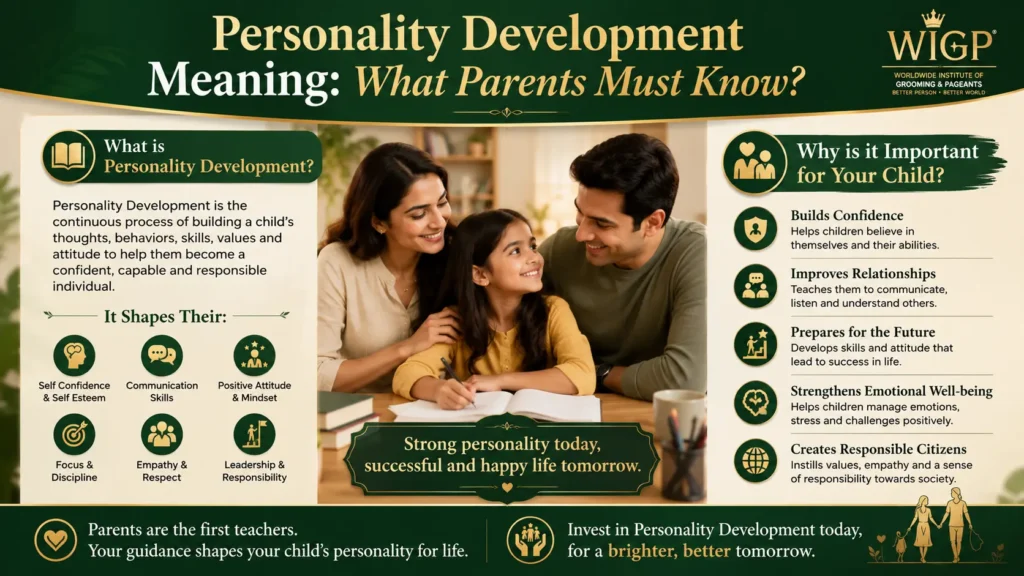

Parents play a crucial role in building a child’s perspective for life. Explore what personality development is and how parents can help in strengthening their child’s personality.
Personality development refers to the process of changing an individual’s behaviour, emotions, and mindset to create a better identity. Just like adults, every child has their own unique identity or personality. Their personality is influenced by multiple factors, including temperament, environment, and character.
Temperament refers to the genetic or inborn qualities of the child. The environment includes surroundings that shape a child’s learning. In addition, character reflects the combination of emotional, mental, and behavioural responses that define how children express themselves.
Personality Development Meaning
Personality development is the journey of self-discovery and growth. This process helps an individual learn to understand, connect, and express themselves effectively. With overall development of personality, children can shape their attitude and achieve their true potential.
Besides speaking and expressing oneself in a composed manner, children with a strong personality can think independently and handle challenges with resilience. To help children through personality development, parents must ensure they grow in a healthy and supportive environment. This is essential because as they grow, experiences from home, school, and society together shape their sense of identity and character. Thus, they evolve into confident and emotionally intelligent adults.
Theories of Personality Development
Personality development theories aim at understanding how individuals grow, adapt, and form their unique identities. Each theory provides details about how people develop their distinct traits, attitudes, and emotional patterns. These frameworks explain why individuals think, feel, and behave in diverse ways throughout their lives.
Here are the five notable theories of personality development:
Freud’s Psychoanalytic Perspective
This theory suggests that personality appears from the dynamic interaction between three elements. These include fundamental desires; the ego, which manages reality; and the superego, which decides moral values.
Erikson’s Psychosocial Stages
Building on Freud’s foundation, Erikson’s psychosocial theory suggests eight key stages of psychosocial growth. Each stage aims at resolving a major conflict that shapes one’s emotional and social maturity.
Trait Approach
This theory identifies personality as a collection of measurable traits that define human behaviour. These traits include openness, conscientiousness, extraversion, agreeableness, and neuroticism.
Bandura’s Social Learning Theory
This theory explains that personality develops through observation and imitation. Children learn behaviours and attitudes by watching influential figures in their lives. It also introduced the idea of self-efficacy, which stresses that belief in one’s abilities significantly affects one’s personal development.
Humanistic Perspective
This theory explains personality growth as a journey toward realising one’s fullest potential. It highlights the value of a positive self-image, acceptance, and progressing toward achieving one’s highest capabilities.
Benefits of Personality Development
Personality development benefits children in leading successful lives and making a positive impact on society. Here are the key benefits of personality development:
Encourages Self-Awareness
Personality development helps individuals in gaining self-awareness by understanding their strengths, weaknesses, and motivations. When children recognise who they are and what they value, they become more considerate about their choices and behaviors.
Builds Confidence
With well-rounded personality development, children become more confident about their abilities. Those who believe in their strengths actively explore new opportunities and focus on achieving them without stressing about failure. Additionally, confident children communicate clearly, take initiative, and handle challenges without stress.
Strengthens Communication
Children with strong personalities are driven towards gaining knowledge. Additionally, they are able to think critically. This strong knowledge and intelligence give them the confidence to communicate confidently and with clarity. Additionally, they are active listeners who interact and engage with others in a respectful manner.
Streamlines Social and Behavioural Skills
A strong personality not only reflects communication and confidence. Children who work on developing their personalities also have good manners, empathy, and emotional balance. These behaviours are induced in children through consistent guidance by parents and mentors.
Promotes a Positive Attitude
Developing an optimistic attitude is essential for gaining emotional strength. When children learn to accept their feelings, they also learn how to respond constructively. Therefore, by teaching them values like empathy, sharing, and compassion, parents can help them take up any challenge with a hopeful perspective.
How can Parents Boost Personality Development in Children?
Nurturing a child’s personality includes shaping their overall growth instead of just providing education. For proper development, they must focus on strengthening a child’s emotional, intellectual, physical, and social abilities. Although every child is born with distinct qualities and capabilities, parents should focus on helping them explore and strengthen these qualities.
Here are key tips for parents to help children develop their personality:
Inspire Independence and Confidence
Allow children to perform daily tasks independently, whether it’s dressing, eating, or organising their belongings. By giving them the freedom to explore and learn from trial and error, parents help cultivate confidence and self-reliance. They must also avoid overprotecting or micromanaging their children. Instead, they should encourage them to take initiative and celebrate their small victories.
Recognise Child’s Uniqueness
Every child is different, and comparing them to others can harm their self-esteem. Parents must embrace their child’s individuality by focusing on their strengths, passions, and unique abilities. They should encourage activities that align with their interests to help them explore and strengthen their talents.
Lead by Example
Children learn most effectively by observing their parents. They naturally incorporate the values and habits they see at home into their life. Therefore, parents must demonstrate respect, kindness, and integrity in their actions. Additionally, they should listen to their children attentively, maintain discipline in their daily routines, and practice empathy in their interactions.
Personality Development Meaning FAQs
Q1. What is the role of parents in personality development?
Ans. Parents act as primary role models. They shape their child’s personality through their words, actions, and behaviour.
Q2. What are the 10 basic qualities of personality development?
Ans. The key qualities of personality development are self-awareness, adaptability, empathy, emotional intelligence, integrity, optimism, resilience, and creativity.
Q3. How much do parents influence personality?
Ans. Parents have a major impact on their children’s personality. As they are the only adults with whom children spend most time, they shape values, behaviours, and preferences. Thus, they serve as the primary role models during their growth.
Leave a Reply