
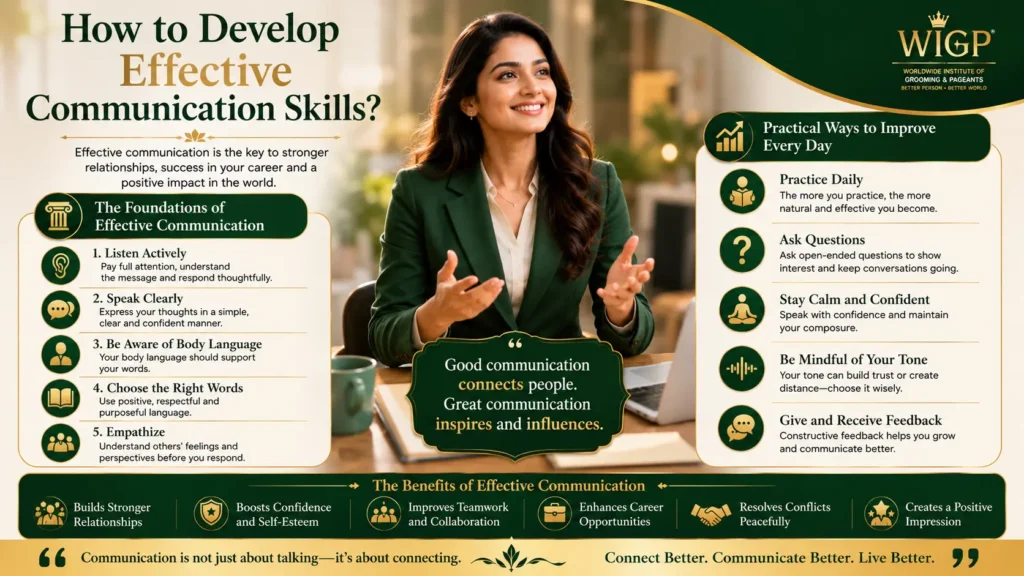

Effective communication is the basis for speaking with clarity and understanding ideas without misunderstanding. Explore the key aspects of communication and how to develop effective communication skills.
The ability to communicate effectively determines how we connect with others. It is a crucial factor that decides how well you can explain yourself and understand others’ points. From professional environments to academic discussions, effective communication helps nurture trust and prevent misunderstandings. Additionally, the ability to communicate effectively gives you the confidence to speak your mind without any hesitation.
To become an effective communicator is not just about speaking well. It’s also about listening attentively, interpreting nonverbal signals, writing with clarity, and managing emotions thoughtfully.
To develop effective communication skills, you need to keep working on them throughout your life, as it is an ongoing process. By becoming more aware of how you express yourself and how you respond to others, you can build stronger personal bonds. This way, you can perform better in professional roles.
Key Aspects of Effective Communication
Effective communication is not limited to speaking. It is a blend of various skills that enable people to connect and understand one another properly. To communicate effectively, one must focus on the following factors:
- The words you choose and the way you speak them make a huge impact on the way you convey a message. Clear articulation, appropriate tone, and logical flow of sentences ensure that your points are properly understood by others.
- Our hand gestures, facial expressions, and posture help us express ourselves more efficiently. Therefore, it is essential to maintain a body gesture that goes well with your way of communicating ideas. With proper hand gestures and facial expressions, you can stress the points where you want others to focus.
- Listening is the foundation of genuine interaction. Therefore, you must focus on what others are saying to gain insights, build trust, and respond more effectively.
- When you are drafting a professional email or preparing a report, you must focus on using simple and appropriate words to write with precision and clarity. This process enhances understanding and professionalism.
- Recognising and managing emotions helps a speaker and listener deliver and understand ideas without any judgement. Therefore, to avoid any misunderstanding, it is essential to manage your emotions.
Practical Tips to Develop Effective Communication Skills
Strong communication skills are essential for success in every aspect of life. This includes academic, competitions, personal, and professional spheres. The ability to express ideas clearly, listen attentively, and connect meaningfully lays the foundation for effective collaboration and growth. Here are practical ways to develop effective communication skills.:
Listen with Attention
Active listening is about understanding the meaning and emotion of the speaker. To be a good listener, you must pay full attention to the speaker and maintain eye contact. Additionally, you should stop doing other activities during communication as they may distract you from listening to the speaker. In case you find a point confusing, prioritise asking questions to effectively understand the message.
Strengthen Nonverbal Awareness
Much of communication happens without words. Your body language, gestures, and facial expressions reveal how you want to convey your message or idea. It is recommended to maintain a neutral posture, use appropriate gestures, and pay attention to your tone of voice. To maintain a positive approach, you should focus on speaking your words with a smile.
Express Ideas Clearly and Simply
Complex language and jargon can lead to confusion. Therefore, you must aim to communicate in a way that’s easy to understand. It is recommended to use simple words and well-structured sentences when expressing your ideas. You should avoid jargon, especially when speaking to people unfamiliar with the topic.
Use Appropriate Body Language
The way you carry yourself when communicating can influence how others perceive you. To speak with confidence and keep a friendly stance, you should make eye contact and smile genuinely. It is also recommended to avoid crossing your arms or appearing distracted. You must maintain a posture that reflects attentiveness and respect for the conversation.
Build Confidence in Public Speaking
Speaking to an audience can feel like a daunting task. However, with proper preparation, you can efficiently accomplish this task. To enhance confidence, it is essential that you practice your presentation multiple times. You can also use visuals to support your message, and speak slowly with clear pronunciation. When speaking to your audience, make eye contact to establish a connection and use light humor to keep them engaged.
Handle Conflicts with Calmness
While communicating your ideas, others may disagree with you. In such situations, you must avoid being aggressive. Instead, try to handle these situations with maturity and calmness. Stay composed, listen to the other’s perspective, and focus on finding a solution that benefits both sides. If others have questions on your idea, listen to them and focus on answering them with a calm mind.
Develop Empathy in Conversations
Empathy enables you to connect with people on a deeper level and understand their emotions well. This approach helps you to understand others’ perspectives before responding. With compassion and patience, you can build trust and promote stronger, more meaningful connections with others.
How to Develop Communication Skills FAQs
Q1. How to improve communication skills effectively?
Ans. To enhance communication skills, you must practice actively listening, speaking clearly, and being mindful of body language and tone.
Q2. What are the 7 C’s of communication skills?
Ans. The 7 C’s of communication skills are clarity, conciseness, concreteness, correctness, coherence, completeness, and courtesy. These skills help ensure communication is clear, brief, factual, accurate, well-organised, comprehensive, and respectful.
Q3. What is the basic rule in effective communication?
Ans. The basic rule of effective communication requires people to use simple, precise, and clear language when communicating their ideas. They must avoid jargon or unnecessary details to keep their message clear and easy to understand.
Leave a Reply